Business Finance / 5 MIN READ
Monthly Financial Review Checklist for Small Businesses (With Examples)
A practical month-end financial review checklist for small businesses, including cash, profit margins, budget variances, and follow-up actions.
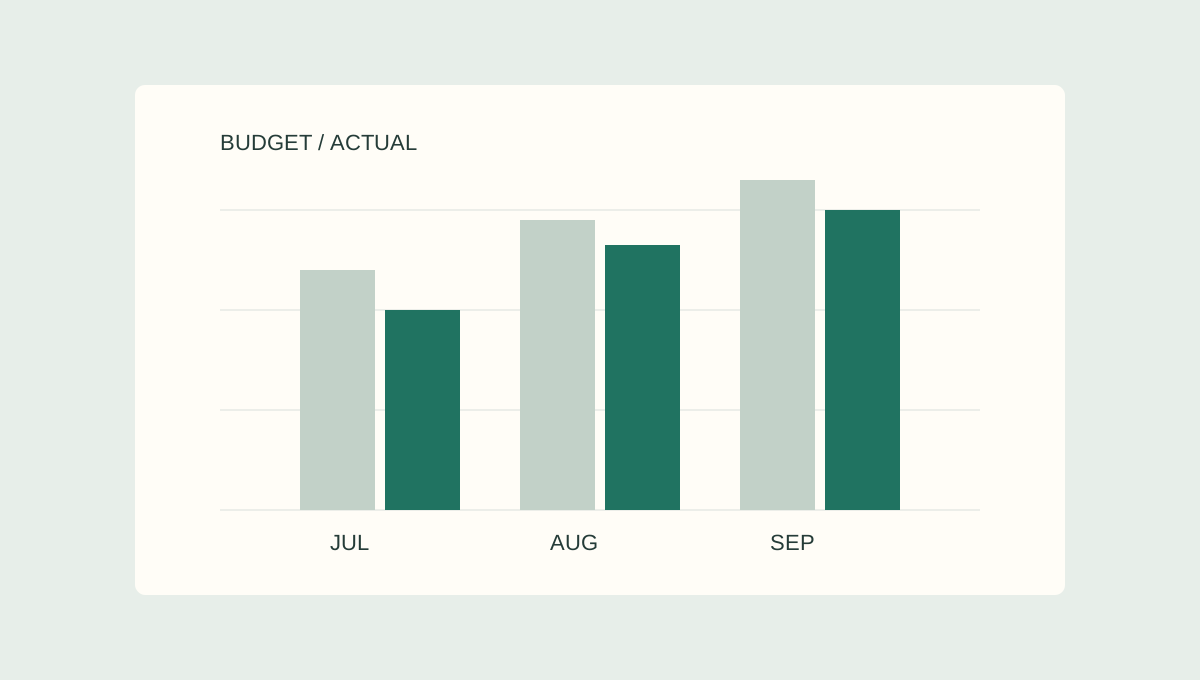
A monthly financial review should answer more than whether your business made a profit. It should show where cash went, what changed from the prior month, which expenses need attention, and what to do before the next close.
You do not need a complicated finance department to run a useful review. Start with a consistent set of numbers, a short checklist, and a few specific decisions. The examples below are illustrative, not actual results from The Finance Desk customers.
Before the meeting: reconcile the numbers
Reviewing inaccurate numbers creates more work than skipping the meeting. Before you interpret results, confirm that bank and credit card balances reconcile, major invoices and bills are recorded in the correct period, and payroll and sales data match the underlying records.
If an account has not been reconciled, mark it as an open item instead of treating the reported balance as final. Record who owns the correction and when it should be resolved.
The monthly financial review checklist
- Revenue: Compare sales with last month, the same month last year when available, and your budget. Separate changes in customer count, volume, and average price when the data supports it.
- Gross margin: Compare gross profit dollars and gross margin percentage. Check pricing, product or service mix, and direct costs.
- Operating expenses: Review payroll, software, rent, marketing, and other major categories. Flag unusual movements and distinguish timing differences from recurring increases.
- Operating profit: Identify whether the month was profitable and which operating drivers changed that result.
- Cash: Reconcile beginning and ending cash, then review large receipts, payments, debt obligations, and upcoming commitments.
- Receivables and payables: Look for overdue customer balances, late vendor bills, and payments that could create a short-term cash squeeze.
- Budget versus actual: Investigate meaningful differences rather than writing explanations for every small line item.
- Forecast: Update your near-term expectations based on confirmed changes, not just the latest month's result.
- Actions: Assign an owner and due date to each issue that needs a decision or follow-up.
This is a management review, not a substitute for proper bookkeeping, tax reporting, or an accountant's review.
Example: turn a payroll overage into a decision
Imagine a business budgeted $40,000 for monthly payroll and recorded $45,000. The $5,000 overage is 12.5% of budget and unfavorable for an expense line.
The first question is not simply why payroll was high. Determine whether the difference came from overtime, a new hire starting earlier than planned, temporary coverage, a payroll timing difference, or a recording error. Those explanations lead to different decisions.
If overtime caused the overage and demand is expected to remain elevated, management might revisit staffing levels and update the next two months of forecasts. If the difference is purely timing, the annual forecast may not need to change. Do not label a cause as confirmed until you check supporting records.
Example: cash fell even though the business earned a profit
Suppose a company reports $12,000 in accounting profit but its cash balance declines by $8,000. That is not necessarily a contradiction. Customers may not have paid their invoices yet, the business may have purchased equipment, or it may have repaid debt principal.
Review cash movements separately from the income statement. Ask what cash is available today, which obligations come due before the next major receipts, and whether the business needs to change its collections or payment schedule.
Keep the review to one page
A useful monthly review can be summarized in five sections:
- Headline: One or two sentences on overall performance.
- Key metrics: Revenue, gross margin, operating profit, and ending cash.
- Largest changes: Two or three material variances, with evidence-backed explanations.
- Risks: Upcoming payments, collections delays, or cost pressures.
- Decisions: The action, responsible person, and target date.
Consistency matters more than an elaborate dashboard. Using the same definitions and review format every month makes it easier to identify trends and follow through.
Common mistakes to avoid
Only looking at the bank balance. Cash matters, but it does not explain profitability or upcoming bills on its own.
Confusing timing with a lasting trend. A late invoice or an early payment can distort a single month. Check the underlying transaction dates.
Treating every variance as equally important. Prioritize changes that are material in dollars, percentage terms, or business risk.
Writing commentary without evidence. “Sales were down due to market conditions” is not a useful explanation unless you can connect it to actual customer, pricing, or volume data.
Ending without actions. A review becomes valuable when someone owns the next decision.
Build a repeatable monthly review process
Start with your bookkeeping reports and a simple checklist. Once the process is consistent, an Excel workbook can make comparisons and follow-up tracking easier.
The Finance Desk's Monthly Review workbook is designed for small-business financial reviews, including trends, reconciliation differences, and follow-up actions. You can also see the Monthly Review product details on Payhip before deciding whether it fits your workflow.
For a deeper look at how to explain budget differences, read our budget-versus-actual variance commentary guide.
PUT IT INTO PRACTICE
Variance Brief
Compare actuals with budget and forecast, investigate material variances, and draft commentary from your inputs.
View Variance Brief on PayhipCheck Payhip for current pricing and compatibility.
Educational content. Examples are fictional and should be adapted and checked against your own reporting policies.
More from Business Finance →